Any Rook is Fine.
Jennifer Shahade is sitting at a chessboard in a video for The Economist, talking about the middle game. She’s a Chess Grandmaster, and she’s describing a problem that has nothing to do with chess skill.
“Which rook should you move to the centre of the board?“ she asks. “It’s actually oftentimes not that important because both of them are good moves.” She calls it the wrong rook problem.
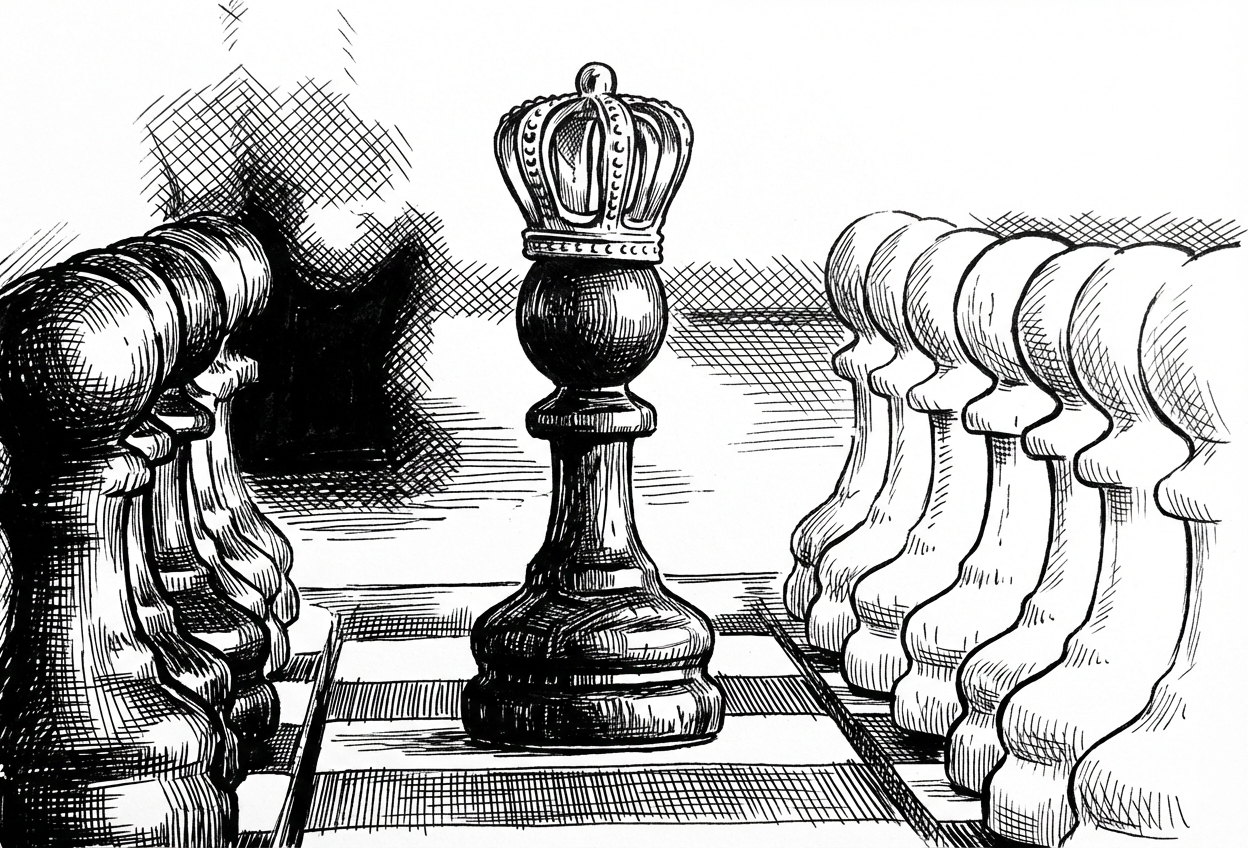
She finished her analysis and arrived at two options that are roughly equal. “You have to trust yourself,” she says, “and say that because they’re both good, then I can’t really make a huge mistake. So instead of spending more time on this decision, make a move, choose a rook, and go on to the next decision.”
Most people hear this and nod. Of course. Don’t overthink it. But the real question is what has to happen before you earn the right to stop and force the decision.
The scientist and the advocate
In 2004, cognitive scientist Michelle Cowley-Cunningham and psychologist Ruth Byrne ran a study on chess players. They recruited ten experts (averaging around 2240 Elo) and ten amateurs (around 1500 Elo), gave them the same position, and asked them to think aloud while they analysed it.
The difference wasn’t in how many moves they considered. It was in how they tested them. The experts kept trying to break their own ideas. They’d find a promising move and then immediately ask: how does my opponent refute this? They generated tests designed to destroy their own plan. The amateurs did the opposite. They’d find a move they liked and then look for reasons it was good.
Cowley-Cunningham called this the difference between falsification and confirmation. Shahade, writing about the study on her Substack Thinking Sideways, frames it as the scientist versus the advocate. The scientist tries to prove the hypothesis wrong. The advocate tries to prove it right.
The critical line from Shahade: “Trouble comes when we believe we are engaging in strategic decision making while we’re really just advocating for our first instinct.”
Two modes, one sequence
The study points to something more practical than “don’t overthink it.” It gives the idea a sequence.
First, the scientist. Take the options and try to break each one. Don’t be gentle on your idea. Question it: what’s the strongest argument against this? Where does it fail? If an option breaks under scrutiny, that’s a good outcome. One fewer thing to decide between.
Then, the executor. Some options survived. Not all broke. This is the ‘wrong rook” threshold, the point where further analysis produces nothing new. The options have been stress-tested. Continued deliberation past here is wasted.
The sequence matters. Skip the scientist’s work and land directly on “both seem fine, I’ll just pick one,” and that confidence is unearned. That’s an advocate who ran out of patience, not someone who tested their options. Stay in scientist mode forever, hunting for some flaw and the lesson inverts. Rigour becomes a disguise for paralysis.
Why equal feels harder
There’s a reason this is difficult. A 2022 study in behavioural science found that when people faced two equal tasks, they made worse prioritisation decisions than when the options were clearly unequal. Equal options didn’t make the choice easier. They made people freeze, spread effort thin, and commit to nothing.
The researchers called it a “Buridan’s Ass dilemma,” after the 14th-century philosophical paradox of a donkey placed perfectly between two identical bales of hay. Unable to choose, it starves.
Perfect symmetry between options doesn’t simplify the choice. It exposes a flaw in how we think about “deciding correctly.” When no analysis can separate two options, the right move is an arbitrary tiebreak, it doesn’t matter.
Analytical thinking is expensive. It’s meant to be switched on for hard problems and switched off once the answer stops changing. The wrong rook trap is what happens when thinking isn’t switched off.
So what does switching off actually look like in practice?
The moves
Here’s the framework, stripped down:
1. Enter scientist mode. Take your options and try to falsify (disprove) each one. Think “in what situations does this fail?” If an option breaks under honest scrutiny, discard it.
2. Recognise the threshold. When you’ve tried to break your remaining options and couldn’t, you’ve arrived. Whichever option remain are fine. They carry acceptable risk. Further analysis won’t change this.
3. Pick and move. Choose one. The basis can be gut feel, a coin flip, or a slight personal preference. The quality of the choice between two surviving options matters far less than the opportunity cost of not choosing at all.
4. Resist the pull back. After you’ve chosen, the temptation is to re-litigate. To wonder if the other option was better. The work’s been done. Trust the process and move to the next decision.
The common mistakes sit at the edges. Skip step one and you’re just an advocate who picked fast. Refuse to leave step one and you’re using thoroughness as an excuse to avoid commitment. The transition between modes is where people get stuck. Knowing when to test & when to chose is the whole skill.
The next move
I’ve been thinking about this because it maps onto the kind of decisions that come up in my work all the time. Which tool to use. Which statistic to target over others. Which approach to take with something that could go either way. The options that actually stall me are rarely “good vs bad.” because that’s an obvious answer. The ones that get me are “good vs also good.” The habit of treating every choice as if there’s a correct answer waiting to be discovered, if I just think a bit harder, is one of the most expensive habits I’ve had to resist in life.
Shahade’s framing is useful because it makes the trap visible. Picking the wrong rook was never the problem. The problem was sitting at the board, hand hovering, waiting for certainty that was never going to come while eating up time on the clock.
Pick a rook. Either one is fine.
P.S. On the lawn
This maps directly onto croquet tactics, and most players already do a version of it without naming it.
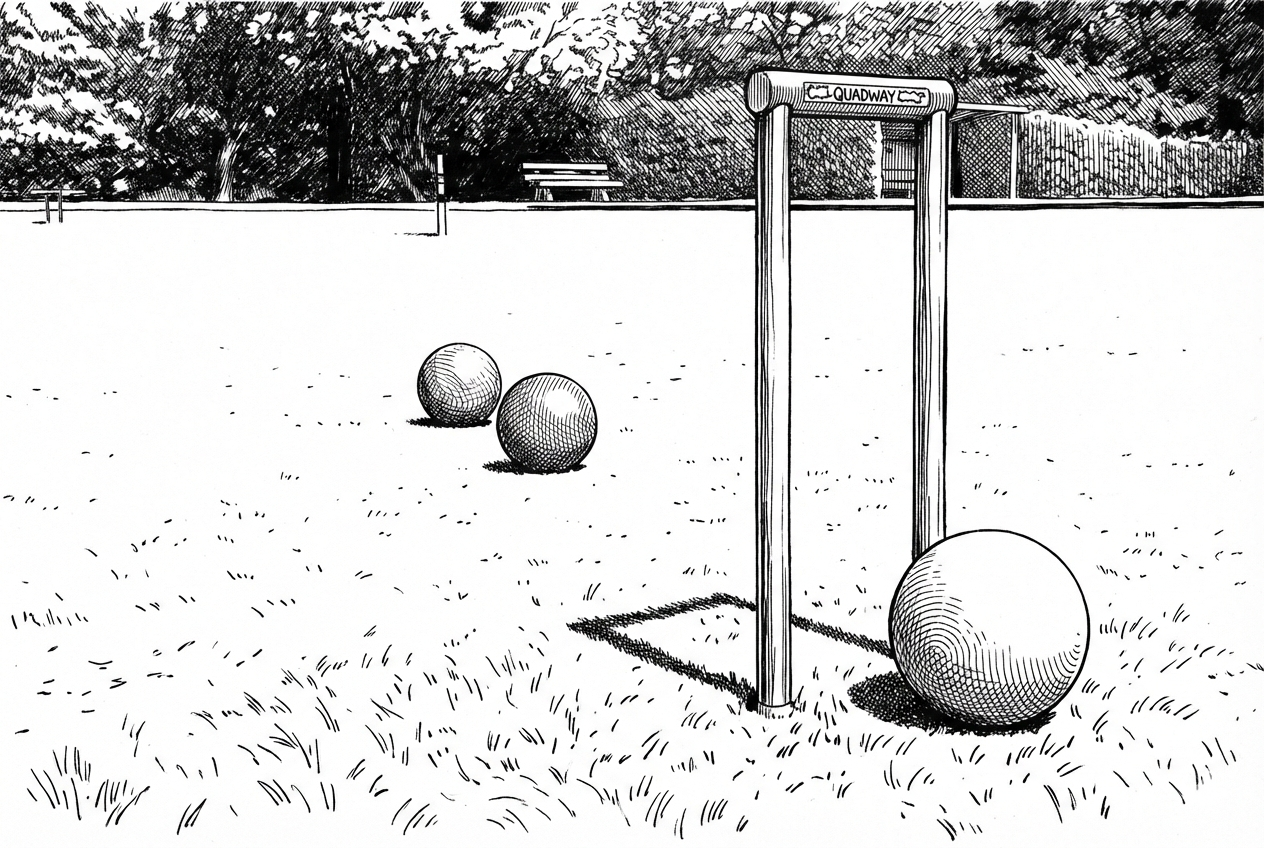
The scientist’s question on a croquet lawn is: what does my opponent do after this shot I plan on playing?
Not what I hope happens next. What the opposition actually do. Play the shot from their side of the game.
The better version of this is a single question that experienced players learn to ask themselves before every shot: what would my opponent least like me to do?
That question is falsification applied to croquet. It forces you out of advocate mode, where you’re building a case for the shot you already want to play, and into scientist mode, where you’re testing your plan against what the other side will actually do with it. Sometimes the answer confirms your instinct. Sometimes it changes the shot entirely.
The players who do this well don’t necessarily win with the best technique. They’re the ones who’ve learned to see the game from a more enlightening perspective.