Nice Guys Finish First
A single interaction rewards selfishness. This is mathematically provable.
But repeat that interaction, and co-operation becomes the winning strategy. This is also mathematically provable.
The maths has been tested and the answer is always the same. Co-operation wins the repeated game. And if a small group of co-operators find each other in a world full of defectors, not only can they survive. They will take over.
The game
Selfishness is always the rational choice in a one-off interaction. 70 years of maths repeatedly shows it. Even when both sides would be better off co-operating, the logic of self-interest entraps them into betraying.
Two housemates. Both would prefer the dishes got done. But for each of them, the best personal outcome is the other person does them. So both leave them. The sink fills up. Both are worse off than if they’d just split the job.
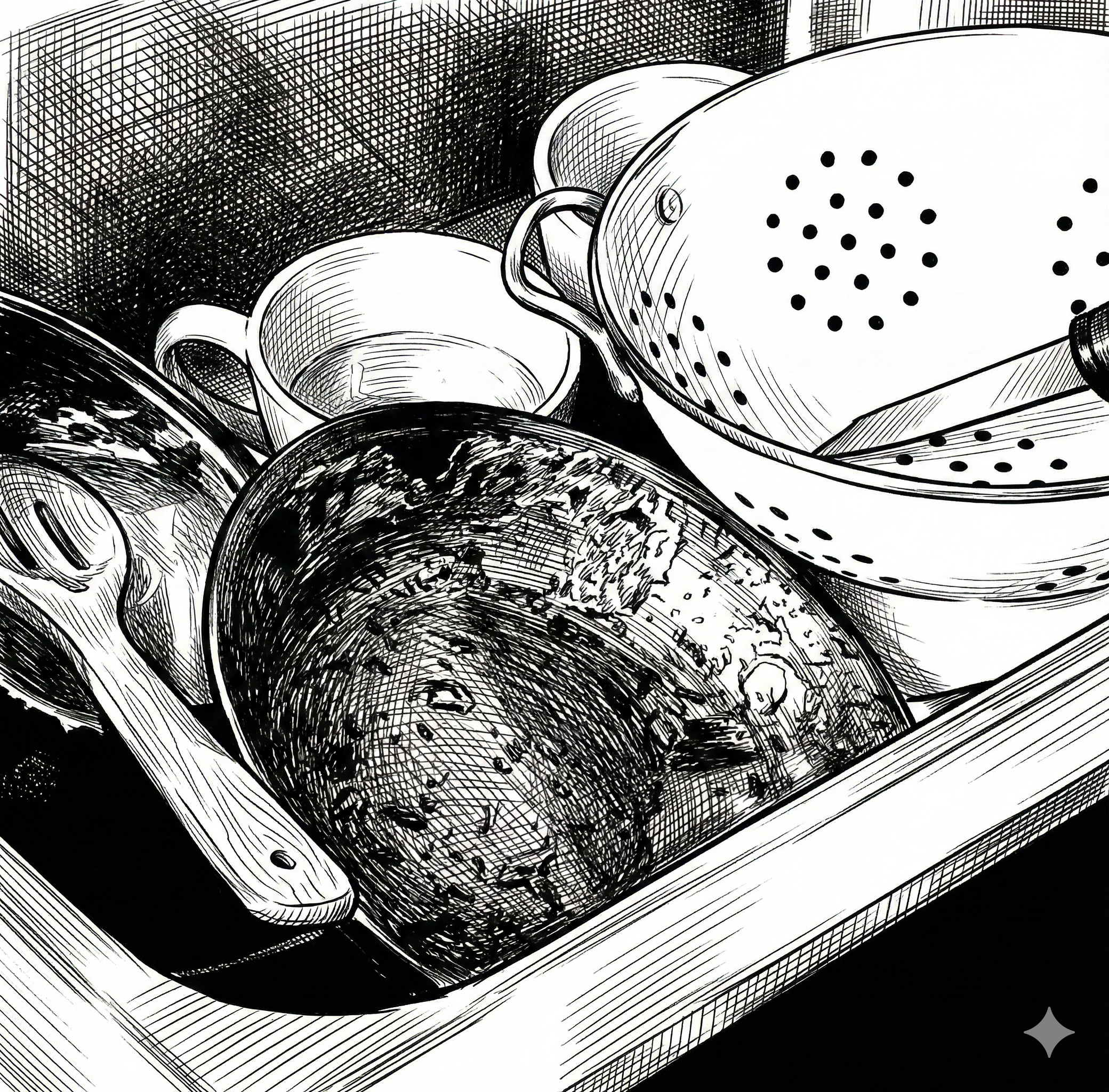
Nobody’s going to do the dishes first. So the sink fills up.
In 1950, two mathematicians at the RAND Corporation built a formal version of this problem. They called it the prisoner’s dilemma. It’s been studied in thousands of academic papers and the game turns up everywhere, from world-ending nuclear standoffs to who takes out the bins.
The repeated game
Repeat the game, and co-operation becomes the winning strategy. The logic flips completely. The dishes need doing every day, not just once. Co-operation becomes a lot more beneficial now.
Fortunately for us, most real-world problems don’t happen once. The housemate is still there tomorrow. The committee meets again next month. The club down the road will be at the next regional event. These people are going to see each other again.
In a single game, defecting is rational because there are no consequences. Screw the other person and walk away. But play again tomorrow, and the other person remembers. They can retaliate. Suddenly, the short-term gain costs more than it was worth and co-operation becomes wise.

What you did yesterday ripples into tomorrow.
How to win the game
The best strategy for the repeated game has two principles.
- Co-operate first.
- Then copy whatever the other player did last time.
In 1980, a political scientist named Robert Axelrod ran a computer tournament. He invited game theorists from around the world to submit programs that would play the repeated game against each other. Some of the submissions were elaborate, with complex logic designed to probe opponents and exploit weaknesses.
The winning straategy had two moves. It co-operates on the first move, then copies exactly what the opponent did last time. Co-operation is met with co-operation. Defection is met with defection. Simple as that. It was called Tit-For-Tat.
Axelrod published the results and ran a second tournament. This time everyone knew what had won the first time so some submitted nicer strategies getting on the co-operation bandwagon. Others submitted nastier ones, hoping to exploit all the extra juicy nice ones. One had 77 sections of logic trying to be clever.
Tit for Tat won again. The super simple strategy. Co-operate and mirror.
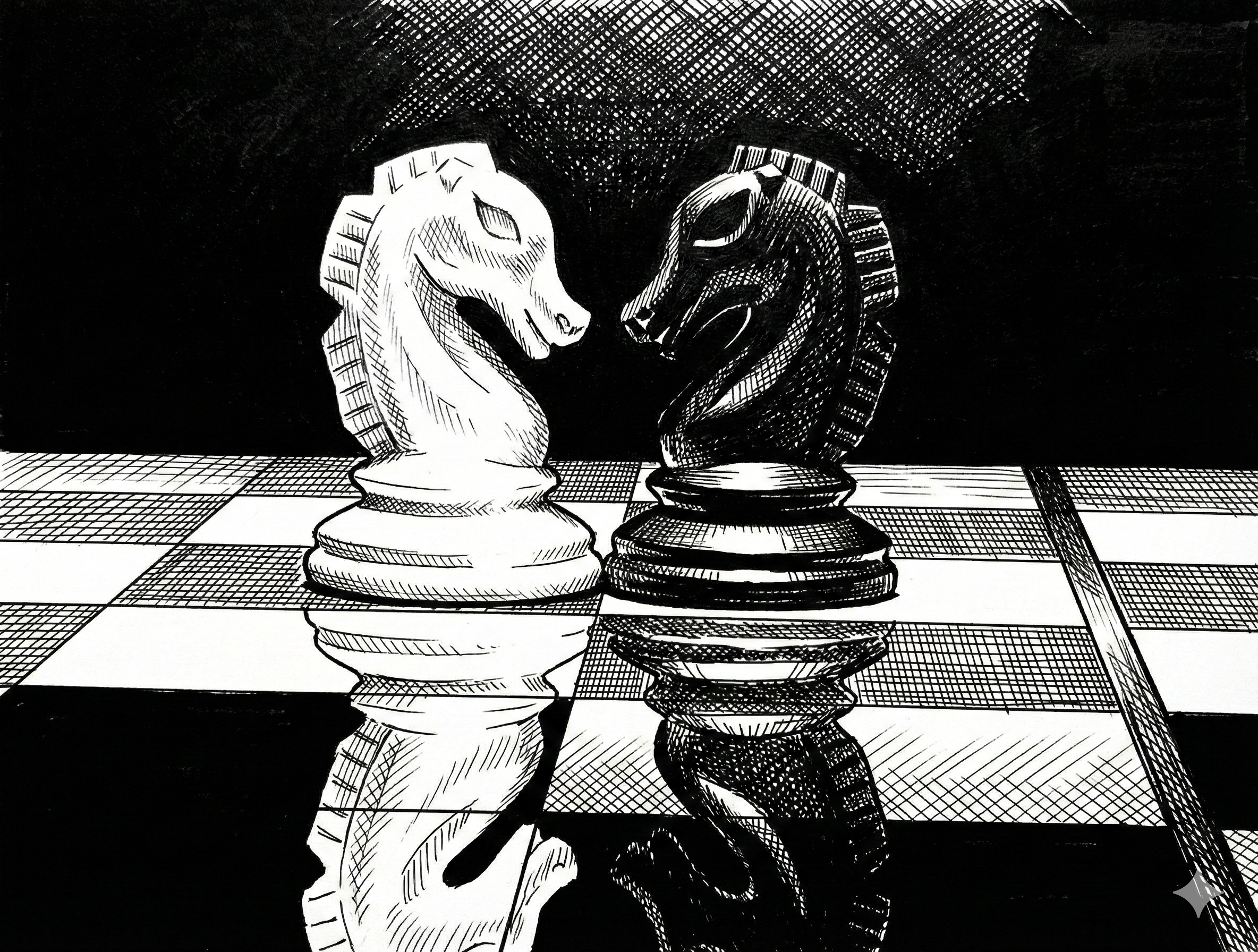
Two moves. Co-operate, then mirror.
The strategies at the top of the leader boards in these competitions all shared four qualities.
- They were nice (never the first to defect),
- forgiving (didn’t hold grudges),
- retaliatory (struck back immediately if provoked), and
- clear (easy for opponents to read).
Simple, consistent, and decent. The complicated, sneaky strategies all finished at the bottom.
How to take over the world
A small group of co-operators, starting in a world full of defectors, will eventually take over.
Axelrod proved this with a simulation. A world full of different strategies, all interacting with each other. The successful strategies grow in number and unsuccessful ones go extinct.
The nasty strategies do well at first. They have the opportunity to prey on weaker strategies and grow quickly. But as the strategies they depend on exploiting go extinct nasty strategies also die out.
After a thousand generations, only nice, co-operative strategies survived.

A small crack is all co-operation needs.
Take a world that’s a terrible place where almost everyone defects. Always. It’s hostile and selfish and there’s no reason to co-operate because every interaction ends in exploitation.
But tucked away in one corner, there’s a small group of co-operators. They interact with each other often because they’re closely grouped together. They co-operate, accumulate better outcomes, and grow. Slowly at first, then faster as their numbers increase. Axelrod showed that if a small island of co-operation can emerge it will eventually take over an entire population.
Co-operation wins because, in a repeated game, it produces better outcomes than defection. The maths doesn’t care about motives. Nice guys finish first.
A small cluster of people doing the right thing, in a world full of people doing the wrong thing, will eventually win. Not by fighting the defectors, defectors fight and consume their own. Nice guys win by repeatedly playing the game and co-operating with each other.